
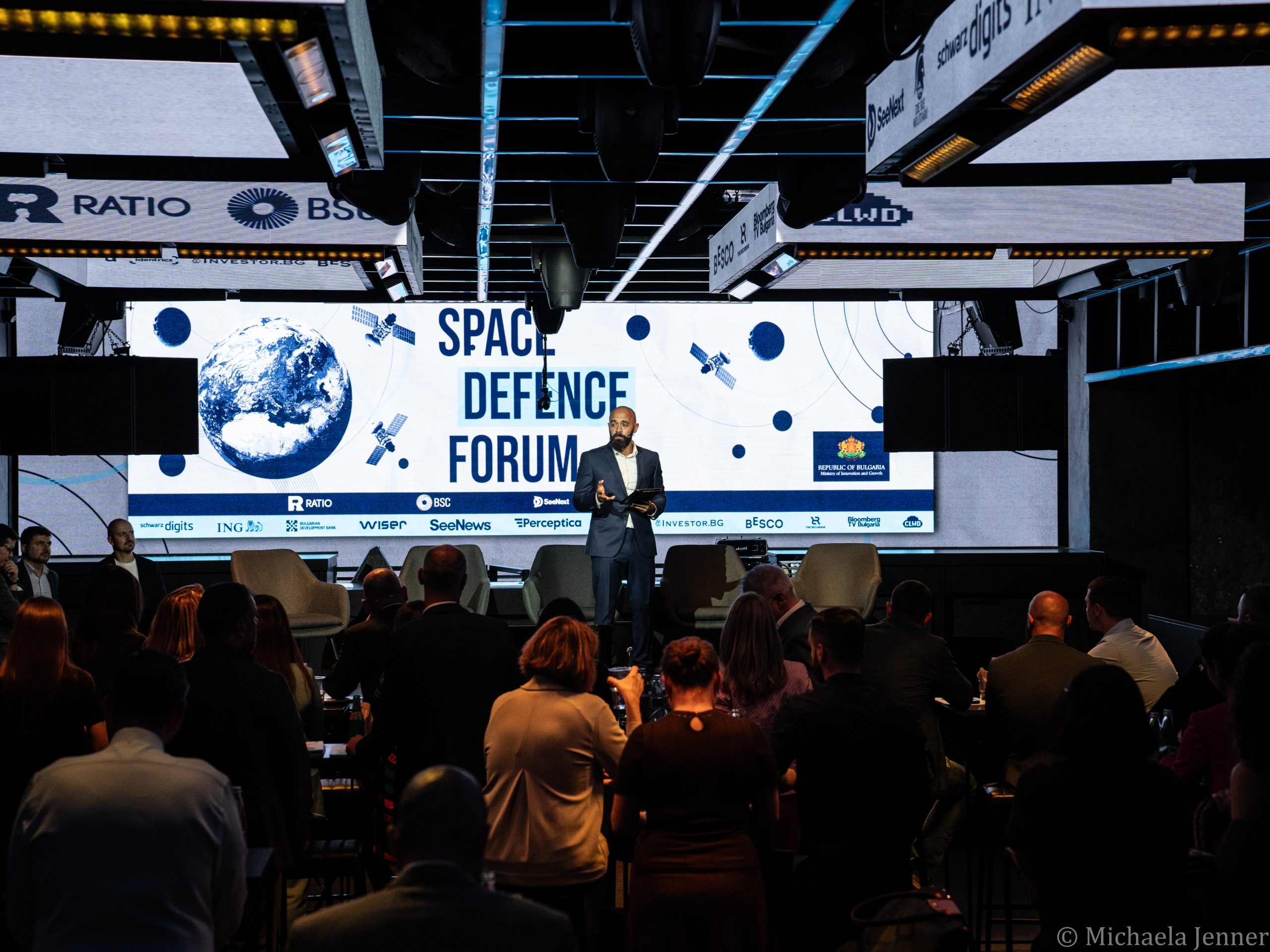
Space Defence Forum (12 May 2026): bringing space, defence and finance into one conversation
On 12 May 2026, the Bulgarian Space Cluster co-hosted the first Space Defence Forum at CLWD Space in Sofia, together with Ratio, SeeNext and De Re Militari, under the patronage of the Ministry of Innovation and Digital Transformation. The forum brought together companies, institutions, investors and researchers from across the space, defence, cybersecurity and finance communities for an afternoon of presentations, panels and networking.
The event was built around a simple observation: Europe’s security debate has widened well beyond military hardware, and now takes in infrastructure, cybersecurity, supply chains and the strategic role of space. For Southeast Europe, that shift raises a practical question: how can the region take part, and where do its real industrial strengths already lie?
A regional picture, backed by data
SeeNext’s first “Defence & Security in Southeast Europe” report anchored the programme. Presenting it, Ognyan Georgiev set out the scale of recent activity: more than €3 billion of new investment has gone into defence technology and manufacturing in the region over the past two years, alongside a growing wave of startups and drone companies funded largely by venture and equity capital. Bulgaria, he noted, leads the region in venture funding for defence and security startups. The gap, according to SeeNext’s reading, is not money or talent but stronger regional coordination, which is precisely the conversation the forum set out to open.

Money, infrastructure & cybersecurity
The first panel, moderated by Georgiev, looked at how prepared Southeast Europe is for a more demanding security environment, and what role financing, digital infrastructure and institutional coordination play in that readiness. It brought together Mihail Petrov (Schwarz Digits Bulgaria), Marina Kobakova (ING Bank), Tsanko Arabadzhiev (Bulgarian Development Bank) and Dimitar Dimitrov (Wiser Technology), spanning banking, development finance and software.
Threats to space and communications
The second segment turned to the systems themselves. Tsveti Monova-Borisova (De Re Militari) gave a keynote on climate intelligence and the environmental risks facing satellites and communication networks. A following panel, moderated by Petko Zhelyazov (Ratio) with Ruslan Trad (Capital) and Georgi Vasilev (Dnevnik), examined how geopolitical tension, cyber threats and anti-satellite capabilities are reshaping the stability of space-based infrastructure.
Strategic autonomy and regional capabilities
The closing panel, moderated by Simon Jenner of the Bulgarian Space Cluster, asked what strategic autonomy means in practice for the Balkans. With Victor Danchev (EnduroSat), Ventsislav Neykov (Wiser Technology) and Dinko Manolov (Kodin Space), the discussion focused on where local companies already contribute, what gaps remain, and how Bulgaria and its neighbours can take a more active role in Europe’s space-and-defence framework.
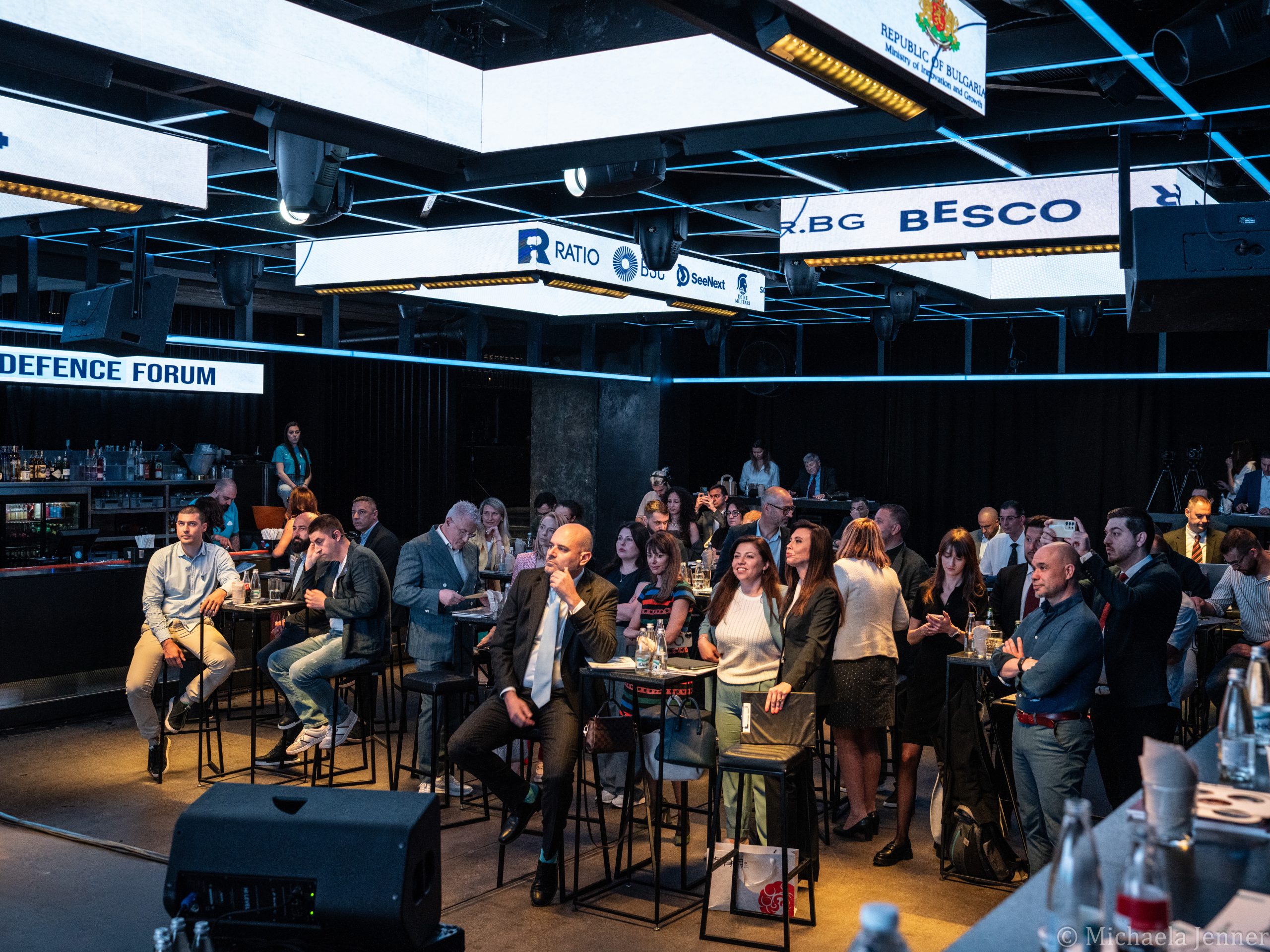
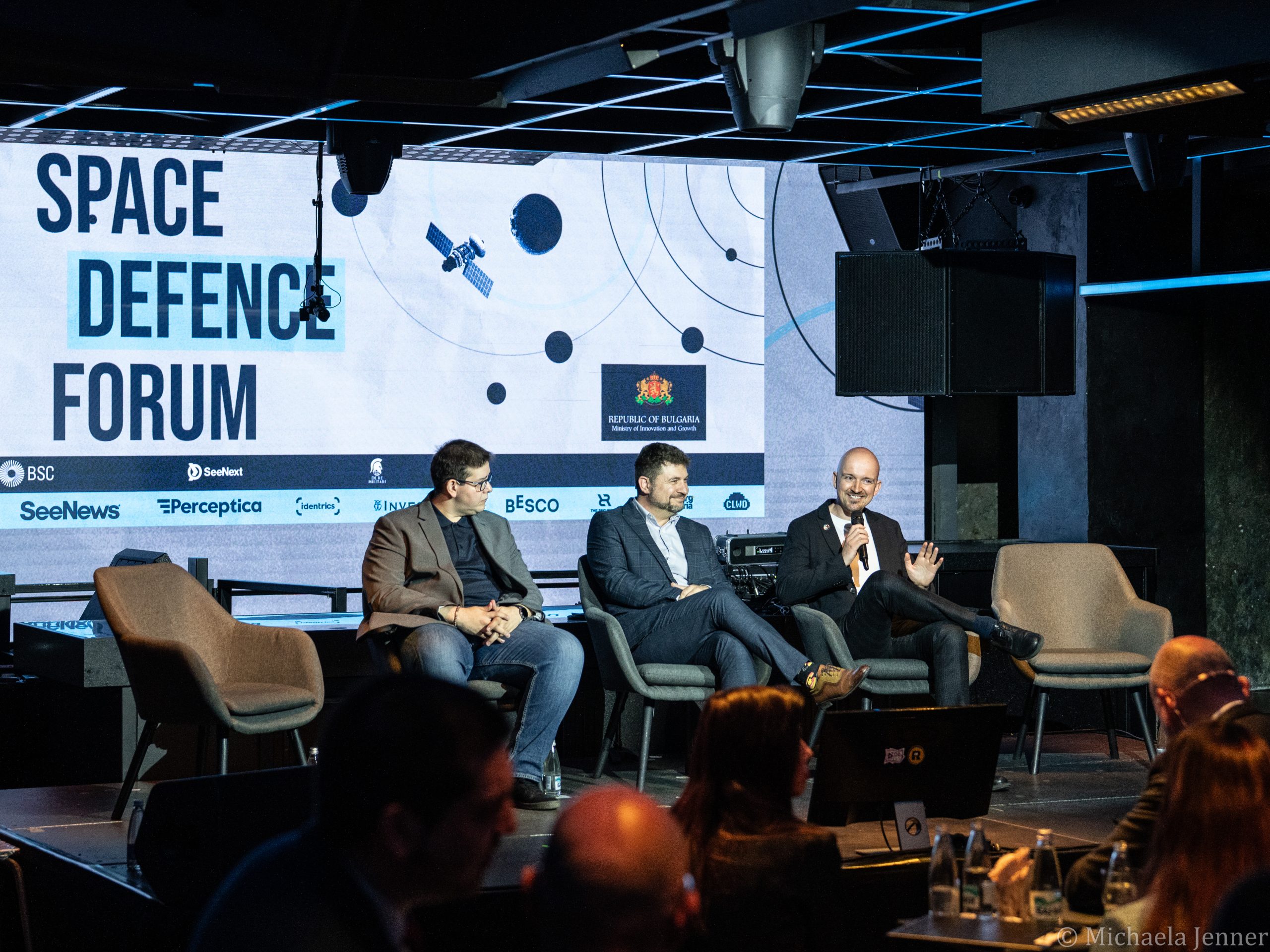
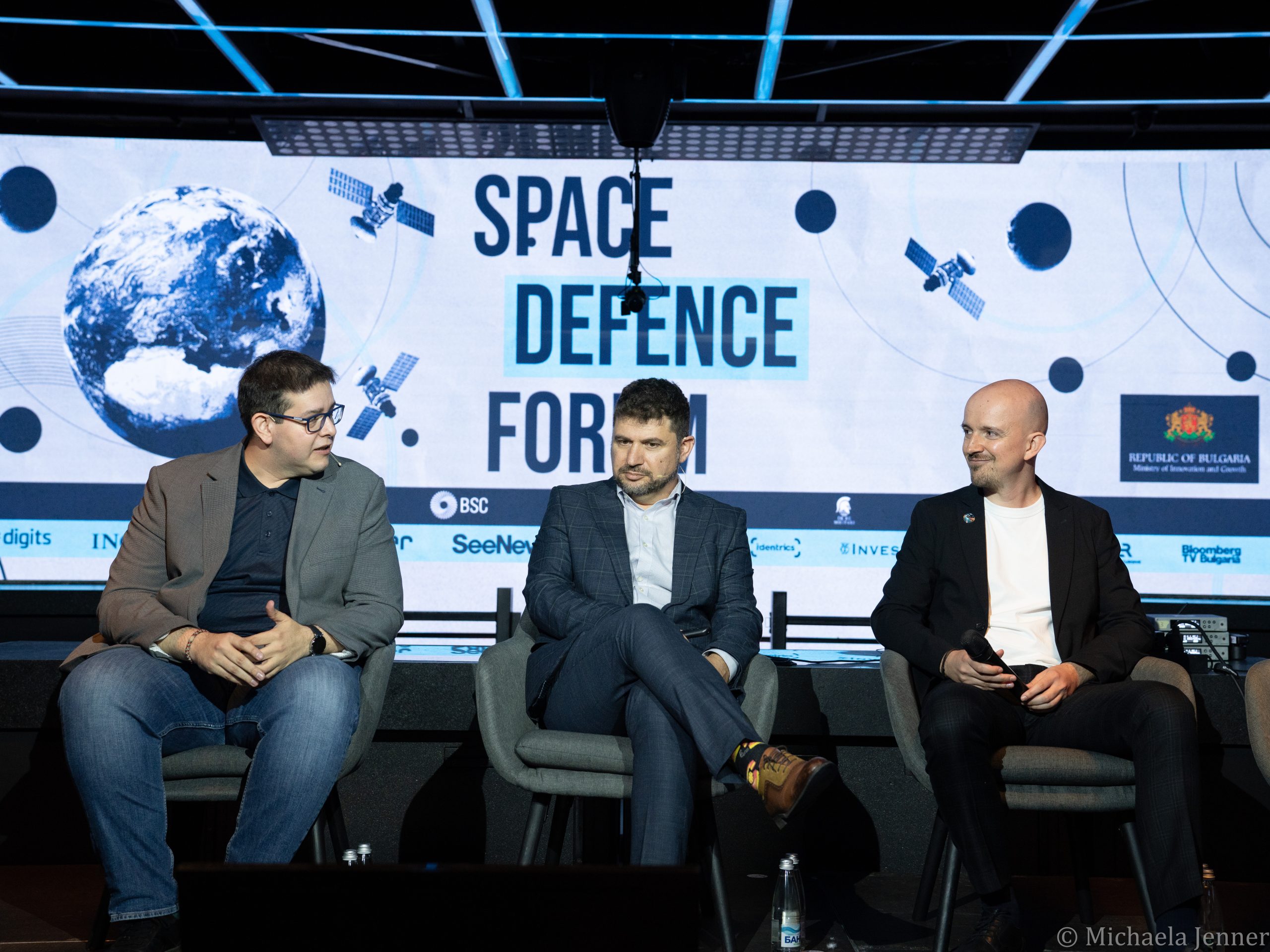

“Europe is entering a period where space, security and strategic autonomy need to be thought about together. The Space Defence Forum is our attempt to bring these topics into a single conversation, with the full context they require and with the key voices on these issues in Bulgaria.” — Liubomir Baburov, co-founder of the Bulgarian Space Cluster and ESA Industrial Coordinator for Bulgaria
Why we did it
The Space Defence Forum was our first attempt to organise an event of this kind. The Cluster usually works behind the scenes, connecting members, pointing teams toward funding paths and helping companies move from interest to real projects. This was the first time we built a full programme around that work and put it on a stage, together with three partnering organisations.
The reasoning was straightforward: space, defence, cybersecurity, infrastructure and financing are increasingly part of the same conversation across Europe, but in Bulgaria and the wider region those threads are rarely discussed together, and rarely with the people who finance, build and analyse them in the same room. The forum was an attempt to bring them together, with enough context to keep the discussion practical, and to give local companies a clearer sense of where they already fit.
That follows from what the Cluster’s mission to connect research, startups, industry and finance, and help Bulgarian companies find their place in the wider European space ecosystem. It also reflects a point that runs through much of our work, that value in space comes less from access to infrastructure than from what gets built with it, from the applications, services and capabilities that solve real problems on the ground.
Working with Ratio, SeeNext and De Re Militari kept the event grounded and shared, rather than the work of any single organisation. As a first effort, it was also a test of the format and of what a recurring conversation on space and defence in the region might look like. The amount of on-site networking and post-event feedback gives us confidence that there is a real need for more events like this and more conversation on such topics.
